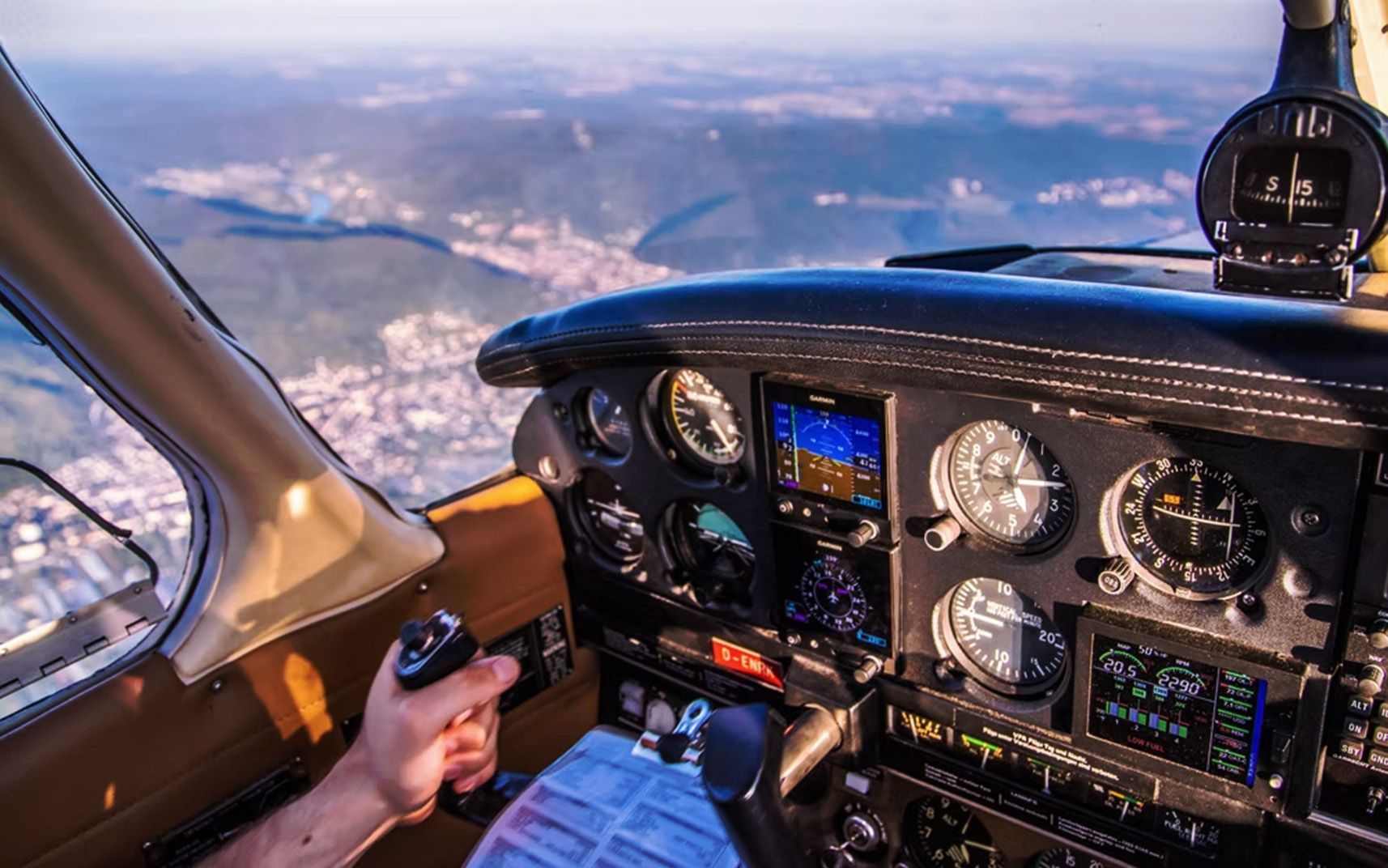
What Is IFR Flight?
IFR flight, or Instrument Flight Rules, refers to navigating an aircraft solely by referencing cockpit instruments rather than outside visual cues. Pilots fly IFR when clouds, weather, or visibility prevent “see-and-avoid” flying under VFR (Visual Flight Rules).
This skill set is crucial because real-world flying often includes:
- Low clouds and fog
- Reduced visibility
- Rain
- haze , smoke, or other atmospheric conditions
- Busy airspace with structured traffic flow
Under IFR, pilots follow a series of procedures, clearances, and navigation standards that allow air traffic controllers to guide aircraft safely through controlled airspace, even when nothing is visible outside the windshield.
According to the
FAA’s Instrument Rating Airplane Airman Certification Standards, IFR flying requires mastery of tasks like precision approaches, holding procedures, instrument navigation, and decision-making in dynamic environments.
In other words, earning an IFR rating isn’t just a step-up, but a transformation in how you fly.
Why IFR Training Matters for Every Aspiring Professional Pilot
If your goal is to progress from Private Pilot to Commercial, and eventually to ATP, IFR training is not optional, but foundational.
Here’s why IFR training is so important for your career:
- Required for advanced ratings: The FAA mandates an Instrument Rating for commercial-level flying, and it is essential for Part 121 and 135 operations.
- Improves safety and confidence: IFR-certified pilots handle weather challenges with precision and discipline.
- Makes you more marketable: Airlines and charter companies expect strong instrument proficiency.
- Expands when and where you can fly: No more being grounded because of cloud layers or haze.
- Strengthens decision-making: IFR pilots are trained to rely on systems, data, and structured procedures.
According to the
AOPA Instrument Rating Guide, IFR flight training builds safer, more capable aviators who understand how to interpret the weather, navigate with precision, and fly within a structured national airspace system.
IFR Requirements: What Students Need to Know
The exact requirements for Instrument Rating eligibility are outlined in the ECFR Instrument Rating Requirements. Some of the major components include:
Minimum Flight Requirements
Students must complete:
- 40 hours of actual or simulated instrument time
- 15 hours with a certified instrument instructor
- Cross-country IFR flight training
- Proficiency in specific approach types (e.g., ILS, GPS, VOR)
Written & Practical Exams
- FAA Instrument Knowledge Test
- FAA Instrument Practical Test (Checkride), including oral exam and flight test
Skill Areas You'll Learn
- Holding patterns
- IFR communication
- Instrument navigation
- Weather interpretation
- Precision & non-precision approaches
- Emergency & abnormal procedures
Nationwide Aviation’s curriculum is built to align directly with these FAA expectations, giving students a structured pathway to becoming confident instrument-rated pilots.
IFR Training at Nationwide Aviation: How the Process Works
Our goal at Nationwide Aviation is to make all flight training, like IFR training, accessible to our students. Our Instrument Rating program focuses on real-world skill-building while meeting all FAA requirements.
Here’s what you can expect as a Nationwide Aviation student:
1. One-on-One, Real-World-Focused Instruction
Training is always delivered by experienced CFII instructors who prioritize safety, clarity, and confidence-building.
2. Modern IFR-Equipped Training Aircraft
Students train using well-maintained IFR-capable aircraft, meaning all procedures are realistic and directly applicable to future career flying.
3. Local Training in the Dallas–Fort Worth Metro
If you’re in Texas, IFR flight training is available at Nationwide Aviation’s DFW-area campuses, offering convenient access for busy students or local residents.
4. Flexible Scheduling
Whether you're training part-time or full-time, Nationwide Aviation adapts to your needs.
5. A Clear Pathway Toward Commercial and ATP Training
IFR proficiency is a core component of the school’s structured progression from Private to Professional Pilot development.
6. Career-Ready Skill Development
Beyond checkride requirements, students learn skills that matter in real airspace: communication, navigation, workload management, and professional cockpit discipline.
How Long Does IFR Training Take?
Training time varies based on:
- Student availability
- Weather
- Flight frequency
- Simulator usage
- Instructor scheduling
Most committed students can complete their IFR rating in a few months, especially when flying consistently.
Investing in IFR Training: What Students Should Expect
IFR training is one of the most valuable investments a pilot can make. While pricing depends on aircraft, hours, and individual pace, students can benefit from:
- A clearly structured program
- Transparent cost breakdowns
- Financing options available
At Nationwide Aviation, we support our students by helping them understand exactly what to expect financially and operationally.
Ready to Start IFR Flight Training?
If you’re exploring the path toward Professional Pilot training, earning your IFR Rating is a major milestone, and Nationwide Aviation is ready to help you begin.
Your next step starts with a Discovery Flight to see the aircraft, meet your instructors, and discuss your options when it comes to IFR Flight Training. Get in touch with us today to get your aviation career off the ground!